
Table of Contents
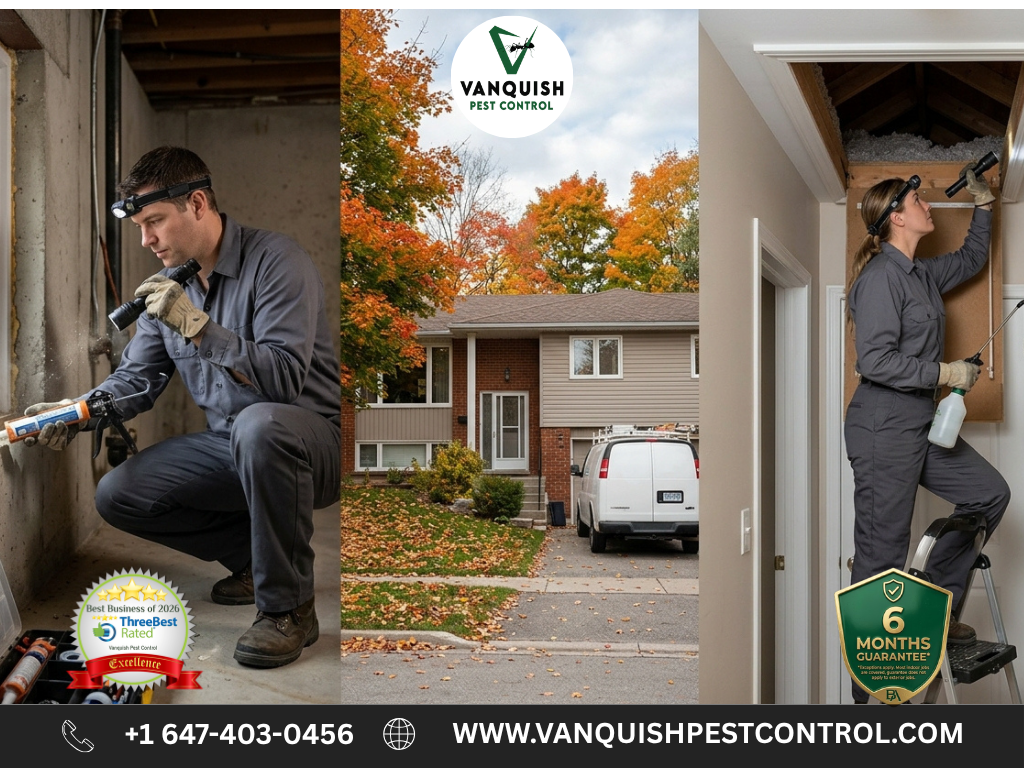
ToggleBasements and attics are common areas for pest activity in Ontario homes. These spaces are often quiet, dark, and less frequently visited than kitchens or living rooms. They may also contain insulation, stored belongings, moisture, and small openings that allow pests to enter.
During fall, pests may search for protected spaces before winter. Basements and attics can provide ideal shelter for mice, spiders, ants, wasps, cockroaches, and other unwanted pests.
At Vanquish Pest Control, we provide professional pest inspection and control services for residential and commercial properties across Ontario. A detailed inspection can help identify signs of activity, possible entry points, and conditions that may support infestations.
Why Do Pests Enter Basements and Attics?
Basements and attics often offer several conditions that pests prefer:
- Limited human activity
- Warmth or stable temperatures
- Insulation and nesting materials
- Moisture
- Stored cardboard and clutter
- Cracks and gaps
- Access to wall voids
- Protection from outdoor weather
Pests may enter through foundations, rooflines, vents, windows, utility openings, and damaged building materials.
Common Basement Pests
Mice and Rodents
Mice may enter basements through foundation cracks, pipe openings, windows, and gaps near utility lines.
Signs include:
- Droppings
- Scratching sounds
- Chewed materials
- Nesting material
- Damaged insulation
- Unusual odours
Rodents may travel from basements into wall cavities and other parts of the property.
Cockroaches
Basements may provide moisture, warmth, and hiding places for cockroaches. Activity may be found near:
- Utility rooms
- Laundry areas
- Plumbing
- Storage spaces
- Floor drains
- Water heaters
- Furnaces
Cockroach activity in a basement may also spread into kitchens, bathrooms, or other rooms.
Spiders
Spiders may build webs in basement corners, window wells, storage areas, and around light fixtures. Increased spider activity may indicate the presence of other insects that provide a food source.
Ants
Ants may enter through foundation cracks, windows, and plumbing openings. Moisture around basement walls or utility areas can contribute to activity.
Common Attic Pests
Mice
Mice may use attic insulation and stored materials to create nests. They may also chew wiring and contaminate insulation.
Wasps and Hornets
Wasps and hornets may build nests in roof voids, soffits, eaves, and other protected areas. If insects are entering and exiting a small opening near the roofline, a hidden nest may be present.
Birds and Other Wildlife
Birds and wildlife may access attic spaces through damaged vents, roof openings, and gaps. Wildlife-related concerns may require specialized assessment and should be handled in accordance with applicable rules.
Spiders and Insects
Attics may attract spiders and other insects because they offer shelter and limited disturbance. Webs, shed skins, dead insects, and activity around windows may be signs that an inspection is needed.
Signs of Pest Activity in a Basement or Attic
Look for:
- Droppings
- Webs
- Nesting material
- Chewed wiring
- Damaged insulation
- Unusual odours
- Insect remains
- Live insects
- Scratching sounds
- Grease marks
- Damaged stored belongings
- Entry holes or gaps
Because pests may hide in inaccessible areas, visible signs should not be ignored.
How to Prevent Basement and Attic Pest Problems
Inspect Foundations and Rooflines
Check for openings around:
- Foundation walls
- Basement windows
- Roof vents
- Soffits
- Eaves
- Utility lines
- Chimneys
- Plumbing penetrations
- Attic access doors
Repairs should be completed using suitable materials and methods.
Control Moisture
Basements should be checked for leaks, condensation, standing water, and damp materials. Attics should be checked for ventilation problems, roof leaks, and moisture buildup.
Moisture can support insect activity and create conditions that attract pests.
Organize Storage
Avoid unnecessary clutter and cardboard. Use suitable sealed containers where possible and keep stored items elevated and away from walls when practical.
Maintain Screens and Vents
Damaged screens and open vents can provide access to insects, rodents, birds, and other pests. Screens should be inspected and repaired as needed.
Trim Outdoor Vegetation
Keep branches and vegetation away from rooflines and exterior walls where practical. Remove debris and leaf buildup near basement windows and foundations.
Why Professional Inspection Is Important
Basements and attics can be difficult to inspect thoroughly without appropriate equipment and experience. Pests may be hidden behind insulation, inside wall voids, under flooring, or around roof structures.
A professional inspection can help identify:
- Pest species
- Signs of activity
- Entry points
- Nesting locations
- Moisture concerns
- Food and clutter sources
- Areas requiring monitoring
- Recommended treatment options
Vanquish Pest Control can recommend a plan based on the property’s condition and the type of pest involved.
Should You Treat a Basement or Attic Yourself?
Some basic prevention steps can be completed by homeowners, such as reducing clutter, storing food securely, and repairing obvious building gaps. However, hidden infestations may require professional attention.
Avoid disturbing hidden nests, handling rodent droppings without precautions, or applying pesticides in unsuitable areas. Pest-control products should always be used according to their labels and applicable requirements.
Frequently Asked Questions
Why do mice enter basements in fall?
Basements offer warmth, shelter, food access, and protected nesting areas as outdoor temperatures become colder.
How do pests enter attics?
Pests may enter through roof gaps, damaged vents, soffits, eaves, utility openings, and other building defects.
Can spiders in the basement indicate another pest problem?
Possibly. Spiders may be attracted to areas where other insects are available for food, although spider activity alone does not prove an infestation of another pest.
When should I inspect my attic and basement?
Early fall is a practical time to inspect these areas before winter encourages more pests to seek shelter indoors.
Keep Your Basement and Attic Pest-Free This Fall
Basements and attics should be included in every seasonal pest-prevention plan. Early inspection can help identify entry points, moisture concerns, nesting material, and signs of hidden activity.
If you have noticed mice, spiders, cockroaches, wasps, unusual odours, or other pest signs in your basement or attic, contact Vanquish Pest Control for professional assistance.
Schedule your fall basement and attic pest inspection with Vanquish Pest Control today.