
Table of Contents
ToggleStored product pests are a serious concern for food manufacturers, warehouses, grocery businesses, restaurants, bakeries, food distributors, and commercial storage facilities.
Unlike pests that enter buildings mainly to find shelter, stored product insects are often attracted to the food materials already present inside a property. They may infest grains, flour, cereals, seeds, nuts, dried foods, spices, and other stored commodities.
Some infestations begin in a single package or delivery. If the affected material is not identified and isolated, insects may spread into nearby stock, storage containers, packaging, and other parts of the facility.
October is a useful time for Ontario businesses to review storage practices, inspect incoming inventory, and prepare facilities for the colder months.
Although some stored product pests are associated with warmer conditions, heated indoor environments can support their continued activity throughout fall and winter.
Vanquish Pest Control provides professional pest management services for commercial properties in Ontario, helping businesses assess pest activity and develop appropriate prevention strategies.
What Are Stored Product Pests?
Stored product pests are insects that infest stored food commodities and materials.
They may attack raw agricultural products, processed foods, packaging, and ingredients held in commercial storage areas.
Common stored product pests include:
- Indianmeal moths
- Flour beetles
- Grain beetles
- Rice weevils
- Sawtoothed grain beetles
- Cigarette beetles
- Drugstore beetles
Different species prefer different food materials and environmental conditions.
Correct identification is essential because the control strategy depends on the insect species, the affected commodity, and the extent of the infestation.
Why Are Stored Product Pests a Problem for Ontario Businesses?
Stored product infestations can create financial and operational challenges for businesses that handle food or agricultural materials.
1. Contaminated Inventory
Insects, larvae, webbing, cast skins, and droppings may contaminate stored products.
Affected materials may become unsuitable for sale or processing.
2. Product Loss
Businesses may need to discard affected inventory, investigate neighbouring stock, and review storage procedures.
Depending on the extent of the infestation, financial losses can become significant.
3. Packaging Damage
Some stored product insects can damage packaging or enter through existing openings.
Damaged packaging can increase the risk of product contamination and further spread.
4. Business Reputation
Food businesses depend on customer confidence.
Discovering insects in packaged products, ingredients, or storage areas can create concerns among customers, suppliers, and business partners.
5. Operational Disruption
A significant infestation may require affected storage areas to be inspected, cleaned, isolated, or reorganized.
This can disrupt receiving, production, and distribution activities.
Common Stored Product Pests Found in Commercial Facilities
Indianmeal Moths
Indianmeal moths are common pantry and stored product pests.
Adult moths are often noticed flying around food storage areas. Their larvae may infest products such as:
- Flour
- Cereals
- Nuts
- Seeds
- Dried fruit
- Pet food
- Other dry food products
One noticeable sign is silk-like webbing around food materials or packaging.
Larvae may also be found inside affected products.
Flour Beetles
Flour beetles can infest flour, cereals, grains, and other stored food products.
They may be discovered inside food containers, storage bins, processing areas, and warehouse stock.
The presence of adult beetles or larvae should prompt inspection of nearby commodities.
Rice and Grain Weevils
Weevils are small beetles associated with stored grains and similar products.
Some species develop inside individual grains, which means infestations may not be immediately visible during routine external inspection.
Sawtoothed Grain Beetles
These small insects may infest cereals, dried foods, seeds, and other stored products.
They can enter damaged packaging and may spread between nearby stored commodities.
Cigarette and Drugstore Beetles
These beetles can infest a variety of dried products, including spices, packaged foods, and other susceptible materials.
Their presence may indicate a problem with incoming stock, existing inventory, or storage conditions.
How Do Stored Product Pests Enter Warehouses and Food Facilities?
Stored product pests can enter a facility through several routes.
Incoming Deliveries
Infested products may arrive through suppliers, distributors, or agricultural deliveries.
Even if the facility itself maintains good sanitation, contaminated incoming materials can introduce pests.
Damaged Packaging
Torn bags, broken seals, open cartons, and damaged containers can expose stored commodities.
Some insects may enter through small packaging defects.
Existing Infested Stock
A previously unnoticed infestation may spread from one product or storage area to another.
This is why regular stock inspection and inventory rotation are important.
Storage Equipment
Insects and larvae may remain in equipment, cracks, shelving, storage bins, and other areas where food residues accumulate.
Cleaning these areas is an important part of prevention.
Warning Signs of Stored Product Pest Infestation
Businesses should watch for the following signs:
Live insects: Adult beetles, moths, or larvae inside packaging, storage containers, and surrounding areas.
Webbing: Silk-like material around food products may indicate Indianmeal moth activity.
Larvae: Small caterpillar-like insects may be found inside or around infested food materials.
Damaged packaging: Small holes, torn packaging, and compromised seals may allow insects to enter or escape.
Cast skins: Shed insect skins may accumulate around stored commodities.
Unusual product appearance: Clumping, contamination, webbing, or insect fragments may indicate an infestation.
Adult moth activity: Repeated sightings around storage areas may indicate a nearby breeding source.
If any of these signs appear, the affected products should be assessed and potentially isolated according to the facility’s food safety procedures.
How to Prevent Stored Product Pests in Warehouses
Prevention requires a combination of inspection, stock management, sanitation, and monitoring.
1. Inspect Incoming Deliveries
Check incoming shipments for damaged packaging, visible insects, webbing, and unusual product conditions.
Where possible, inspect high-risk commodities before placing them into general storage.
2. Use Proper Food Storage Containers
Keep susceptible materials in suitable sealed containers.
Packaging should be intact and appropriate for the product being stored.
3. Apply First-In, First-Out Inventory Management
A first-in, first-out system helps prevent older inventory from remaining unnoticed for extended periods.
Regular stock rotation also makes it easier to identify problems before they become widespread.
4. Clean Storage Areas Regularly
Food residue and spilled materials can support pest activity.
Clean:
- Shelving
- Storage bins
- Floor edges
- Corners
- Machinery
- Pallet areas
- Packaging stations
- Receiving zones
Pay attention to areas that are difficult to access during normal cleaning.
5. Remove Damaged Products
Affected stock should be assessed and handled according to the business’s food safety procedures.
Do not move potentially infested materials into unaffected storage areas without appropriate containment.
6. Reduce Clutter
Unnecessary packaging, cardboard, and unused materials can make inspections more difficult.
Keep storage areas organized and allow appropriate access around shelving and stock.
7. Monitor High-Risk Areas
Monitoring programmes can help identify insect activity before it becomes a larger problem.
The monitoring method should be selected according to the pest species, facility layout, and operational requirements.
Why Professional Stored Product Pest Control Matters
Stored product pests can be difficult to manage because infestations may remain hidden inside packaging, commodities, machinery, and storage equipment.
Treating visible insects without identifying the infested products or breeding source may not resolve the underlying problem.
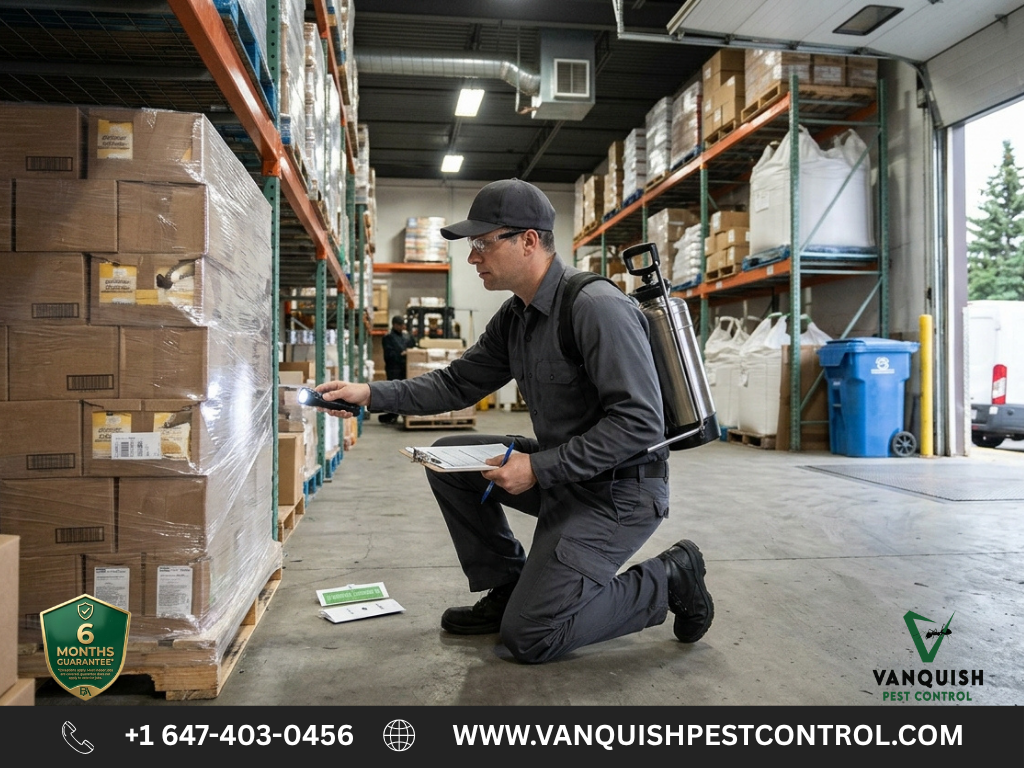
Professional pest management may include:
- Inspecting affected products and storage areas.
- Identifying the pest species.
- Assessing the extent of the infestation.
- Identifying potential introduction routes.
- Reviewing sanitation and storage conditions.
- Recommending appropriate control measures.
- Establishing monitoring and prevention procedures.
For food businesses, any pest treatment must be coordinated with facility food safety requirements. Pesticide applications must follow product labels and must not contaminate food, packaging, or food-contact surfaces.
Some situations may also require product testing, commodity handling procedures, or specialist advice.
Why October Is a Good Time for a Warehouse Pest Inspection
October is an appropriate time for businesses to review their pest prevention systems before winter.
Although outdoor pest activity may change as temperatures decline, indoor warehouses and food-processing facilities can maintain conditions that support insect activity.
A fall inspection can help businesses:
- Review incoming stock procedures
- Identify hidden insect activity
- Inspect long-term stored products
- Check packaging integrity
- Review cleaning schedules
- Examine storage equipment
- Identify sanitation concerns
- Improve pest monitoring
Businesses that handle flour, grains, cereals, dried foods, spices, seeds, nuts, and similar materials should pay particular attention to stored product pest prevention.
Frequently Asked Questions About Stored Product Pests
What are the most common stored product pests?
Common stored product pests include Indianmeal moths, flour beetles, rice weevils, grain beetles, sawtoothed grain beetles, cigarette beetles, and drugstore beetles.
How do pantry moths enter commercial warehouses?
They may be introduced through infested food products, incoming shipments, packaging, or existing stock.
Can stored product pests survive during Ontario winter?
Yes. While outdoor conditions become colder, heated warehouses and food facilities may provide suitable conditions for certain stored product insects to remain active.
How can I tell if flour or grain is infested?
Look for live insects, larvae, webbing, cast skins, damaged packaging, and unusual product conditions. Suspected affected stock should be isolated and assessed.
Can professional pest control eliminate stored product pests?
Professional pest management can help identify infestation sources and develop appropriate control and prevention strategies. The results depend on the pest species, affected commodities, infestation extent, and facility conditions.
How often should warehouses receive pest inspections?
Inspection frequency should reflect the type of products stored, the facility’s pest history, incoming material risks, and monitoring results. A pest management professional can recommend an appropriate schedule.
Professional Commercial Pest Control for Ontario Warehouses and Food Businesses
Stored product pest infestations can affect product quality, inventory, business operations, and customer confidence.
The best prevention strategy combines proper storage, regular inspection, sanitation, stock rotation, monitoring, and professional pest management when needed.
Vanquish Pest Control provides professional pest control services for commercial properties across Ontario. If your warehouse, food business, or storage facility has noticed moths, beetles, larvae, webbing, or other signs of stored product pests, a professional assessment can help identify the problem and determine suitable next steps.
Contact Vanquish Pest Control today to discuss commercial pest inspection and prevention services for your Ontario facility.