
Table of Contents
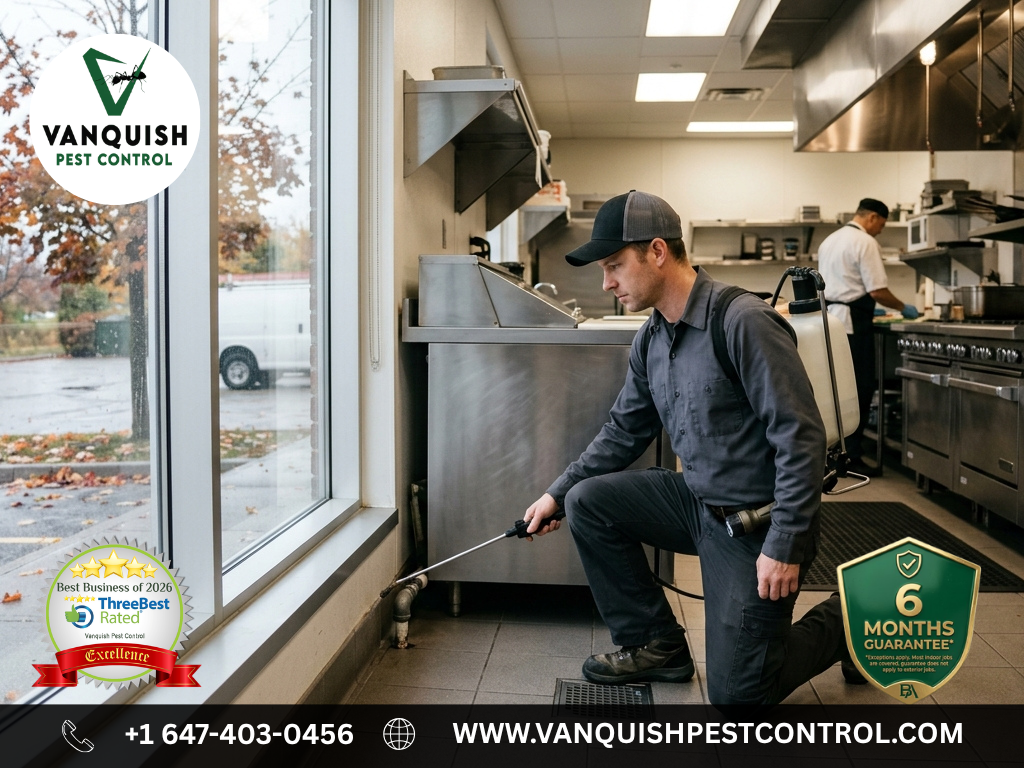
ToggleRestaurants and food-service businesses face pest-control challenges throughout the year. During fall, changing temperatures may encourage rodents and insects to search for shelter, food, and moisture inside commercial kitchens, storage rooms, garbage areas, and delivery entrances.
A pest problem in a restaurant can affect food safety, customer confidence, staff comfort, and business operations. Even when pests are not visible, they may be hiding behind equipment, inside wall voids, near drains, or around storage areas.
Vanquish Pest Control provides professional commercial pest control services for restaurants, cafés, bakeries, commercial kitchens, retail businesses, and other properties across Ontario.
Why Fall Is Important for Restaurant Pest Prevention
As outdoor temperatures decrease, pests may move toward warmer indoor areas. Restaurants can be especially attractive because they provide:
- Food residue
- Moisture
- Warm equipment
- Storage areas
- Garbage and recycling
- Delivery doors
- Cardboard packaging
- Hidden plumbing routes
A proactive fall pest inspection can help identify vulnerabilities before pest activity becomes more difficult to manage.
Common Restaurant Pests in Ontario
Cockroaches
Cockroaches are a major concern for commercial kitchens because they can hide in small cracks and protected areas near food, water, and heat.
Common hiding areas include:
- Behind refrigerators
- Under sinks
- Near dishwashers
- Inside cupboards
- Around plumbing
- Behind ovens
- In wall voids
- Near storage shelves
Signs may include droppings, shed skins, egg cases, unpleasant odours, or live cockroaches.
Cockroach control should address the source of activity rather than only treating visible insects.
Rodents
Mice and rats may enter restaurants through:
- Loading bays
- Garage-style doors
- Foundation gaps
- Pipe openings
- Roof penetrations
- Damaged screens
- Utility openings
Signs include droppings, gnaw marks, damaged packaging, nesting material, and scratching sounds.
Fruit Flies
Fruit flies are often associated with overripe produce, beverage residue, drains, recycling, and damp organic material.
Restaurant fruit fly control should consider:
- Produce storage
- Beverage stations
- Floor drains
- Mop sinks
- Garbage areas
- Recycling bins
- Food preparation surfaces
- Cleaning routines
Simply killing adult flies may not eliminate the breeding source.
Flies and Other Insects
Flies may enter through open doors, damaged screens, waste areas, and delivery entrances. Outdoor lighting and exposed food waste can increase insect activity around the building.
Common Restaurant Pest Entry Points
Restaurant owners and managers should inspect:
- Rear delivery doors
- Loading docks
- Floor drains
- Pipe penetrations
- Wall cracks
- Roof vents
- Windows
- Garbage-storage areas
- Damaged door sweeps
- Gaps beneath equipment
Doors should remain closed when not in use, and damaged screens or seals should be repaired.
Kitchen Practices That Support Pest Prevention
Clean Food Residue Promptly
Grease, crumbs, sauces, sugar, and food residue can attract pests. Cleaning should include areas beneath and behind equipment where food may accumulate.
Manage Moisture
Repair leaking taps, pipes, dishwashers, refrigeration units, and drains. Keep wet areas as dry as practical.
Store Food Properly
Food should be stored in suitable sealed containers and kept off the floor where appropriate. Inspect packaging for signs of pest damage.
Control Cardboard
Cardboard boxes can provide hiding places for cockroaches and other pests. Remove unnecessary cardboard from food preparation and storage areas.
Maintain Waste Areas
Garbage and recycling areas should be cleaned regularly. Waste containers should remain closed where possible, and spills should be addressed promptly.
Keep Drains Clean
Drains can support organic buildup and attract flies. Commercial kitchens should follow appropriate cleaning and maintenance procedures for drains and grease-management systems.
Why Professional Restaurant Pest Control Matters
Restaurant pest control requires a careful and structured approach. Treatments must be suitable for the property, pest species, food-handling environment, and applicable product-label requirements.
Professional pest control may include:
- Detailed inspection
- Pest identification
- Assessment of food and moisture sources
- Review of entry points
- Targeted treatment recommendations
- Monitoring
- Documentation and communication
- Prevention planning
- Follow-up where needed
A professional can help determine whether the issue is linked to a local source, a building entry point, neighbouring properties, deliveries, waste management, or ongoing sanitation conditions.
Fall Pest Control Checklist for Restaurants
Before winter, restaurant managers should:
- Inspect delivery doors and door sweeps
- Check for gaps around pipes and vents
- Review garbage and recycling procedures
- Clean beneath kitchen equipment
- Inspect food storage areas
- Check for rodent droppings
- Review fruit fly activity near drains
- Repair damaged screens
- Reduce unnecessary cardboard
- Schedule a professional pest inspection
Frequently Asked Questions
What pests are common in Ontario restaurants?
Cockroaches, rodents, fruit flies, house flies, ants, and stored-product pests may affect restaurants and food businesses.
Why are fruit flies difficult to eliminate?
Fruit flies can continue breeding in drains, organic buildup, produce residue, garbage, and damp areas. Finding and correcting the breeding source is important.
Can mice enter through restaurant delivery doors?
Yes. Delivery doors and loading areas can provide access if gaps, damaged seals, or open doors are present.
How often should a restaurant receive pest control?
The appropriate frequency depends on the property, pest risks, business type, inspection findings, and applicable requirements. A professional can recommend a suitable plan.
Protect Your Commercial Kitchen This Fall
Restaurant pest prevention is most effective when inspection, sanitation, maintenance, monitoring, and professional treatment work together.
If your restaurant or commercial kitchen has noticed cockroaches, rodents, fruit flies, or other pests, Vanquish Pest Control can help assess the situation and recommend practical next steps.
Contact Vanquish Pest Control today for professional restaurant pest control in Ontario.